A small leak has a way of making itself known at the worst possible time.
Maybe it’s a damp patch on the ceiling after heavy rain. A dripping seam on your caravan roof halfway through a trip. A terrace joint that’s been letting water in slowly for months, and now the damage underneath is worse than you thought. Whatever the situation, the fix you reach for matters a lot more than most people realise.
Not all waterproof tapes are the same. Some are built for light indoor use and fall apart the moment real weather hits them. Others are engineered specifically for the kind of leak – roof seams, pipe joints, structural edges, and insulation panels – that can cause serious damage if the repair doesn’t hold.
So before you grab whatever’s closest on the shelf, here’s what you actually need to know.
The surface you’re sealing changes everything
This is the first thing most people skip over, and it’s the most important factor of all.
A tape that bonds brilliantly to metal roofing might fail completely on a damp concrete terrace. A tape designed for flexible materials might not adhere properly to a rigid substrate. The surface type. What it’s made of, whether it’s smooth or textured, and whether it’s indoors or exposed to UV should be the first questions you ask before choosing anything.
Think about where the leak is coming from:
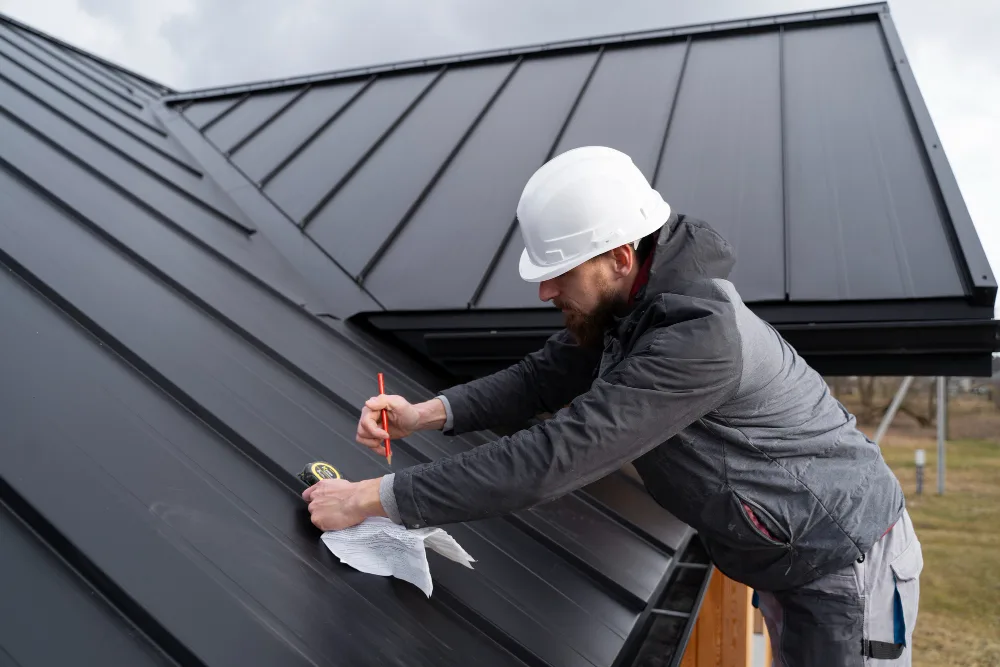
Roof seams and joints need a tape with UV-stable backing that won’t degrade after months of direct sun exposure. Flat roofs and terraces need something that bonds to concrete or coating surfaces and stays bonded through freeze-thaw cycles. Basement edges and garage floors — especially where a liquid membrane will go over the top — need a tape that accepts further coatings. Caravans and modular buildings need flexibility because those structures move slightly with temperature and the tape has to move with them.
Getting this match right is the difference between a repair that lasts years and one that starts peeling at the edges inside six months.
What makes a waterproof tape actually waterproof
The word “waterproof” gets used loosely. What you’re really looking for is a combination of three things: the right backing material, the right adhesive formula, and a proper seal that doesn’t leave any path for water to get underneath.
The backing is what sits on top and takes the weather. A basic polyethylene backing handles light moisture. But for anything exposed to real outdoor conditions — sun, frost, rain, or wind — you want something more robust. UV-stable backings in particular are worth paying attention to if the tape is going anywhere near a roof or exterior surface, because UV degradation is usually what causes tapes to crack and fail before the adhesive does.
The adhesive is what does the actual work. Pressure-sensitive adhesives work well on clean, dry, relatively smooth surfaces. For trickier conditions – rough surfaces, damp substrates, and cold-weather application – a solvent-based primer used first can dramatically improve the bond. This is especially relevant on older or damaged surfaces where getting a perfect prep isn’t always realistic.
Then there’s the seal itself. A tape applied with air bubbles trapped underneath, or with edges that weren’t pressed down firmly, will fail at those exact points. A seam roller — either silicone or stainless steel — used after application removes air bubbles and pushes the adhesive into full contact with the surface. It’s a small step that makes a measurable difference to how long the repair holds.
Matching the tape to the job
Once you know your surface and understand what makes a tape perform, it comes down to picking the right product for the specific application.
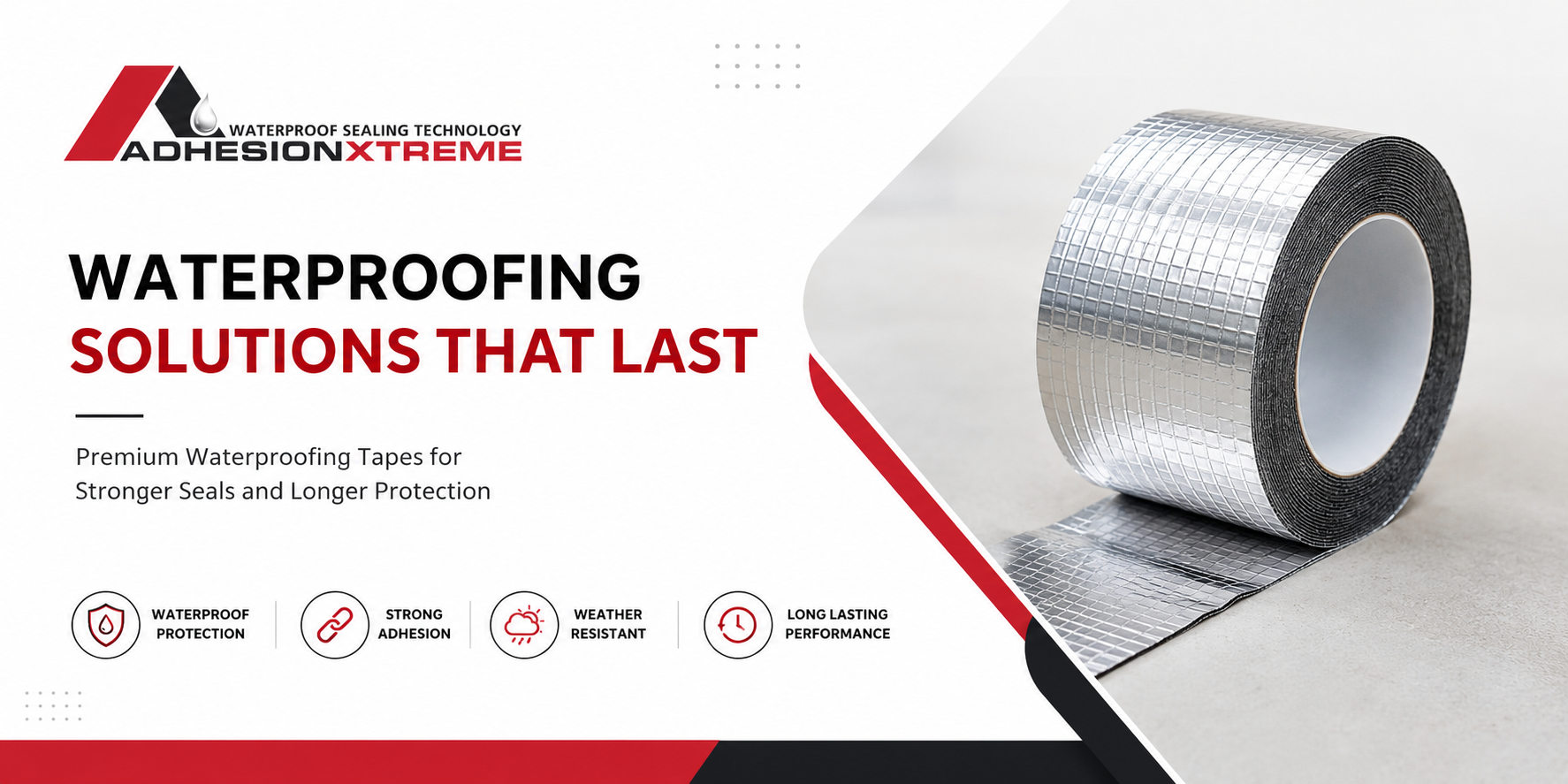
For roof repairs and seam sealing, you want a self-adhesive tape with a UV-stable backing that bonds directly to common roofing materials without needing a primer on a clean surface. AdhesionXtreme’s RoofBond® is built exactly for this — available in grey, white and black to suit different roof finishes, it’s designed for both small repairs and larger roofing installations. For situations involving chimneys or irregularly shaped protrusions where a flat tape can’t conform cleanly, RoofBond® Stretch handles the curves without cracking or lifting.
For terraces, basement edges, and garage floors, particularly where a liquid urethane coating is going over the top, you need a tape that accepts further treatment rather than repelling it. AdhesionXtreme’s Addhésion® Fleece and MultiTask® both feature non-woven backings specifically designed to bond with roof coatings and liquid finishes applied on top — meaning the tape becomes part of a complete waterproofing system rather than just a repair sitting underneath it.
For sealing between two surfaces — bonding two different materials together, or sealing a joint where you can’t access one side from the outside — a double-sided solution works where standard tape can’t. AdhesionXtreme’s 2Sided® puts the adhesive formula on both surfaces.
making it the go-to for joints between dissimilar materials, or anywhere the seal needs to grip from both directions.
For insulation panels, window frames, and internal air barriers, you need something that creates an airtight rather than just watertight seal. InsulAtor® from AdhesionXtreme handles exactly this — it’s used for sealing insulation panel joints within walls and ceilings or creating tight seals around timber floors and window frames where draughts and moisture both need stopping.
The conditions at application time matter too
One thing people overlook is that even the best tape is harder to apply correctly in cold weather, on a wet surface, or in direct sunlight that’s heating the substrate.
Cold reduces the initial tack of most adhesives, meaning the tape needs more pressure and more time to form a proper bond. If you’re working in low temperatures — below about 5°C — a liquid primer applied first compensates for this significantly.
Wet surfaces are a real challenge. Ideally you want the substrate clean and dry. If that’s genuinely not possible, the primer again helps. But wherever you can, let the surface dry before applying – even an hour of dry conditions makes a difference.
Heat can actually work in your favour on some tapes, softening the adhesive and helping it conform to the surface. But direct sun on a roof in summer also means the surface can be too hot to handle and the tape can shift before it sets. Early morning application in summer conditions is usually the better call.
One question worth asking before you buy
Is this a temporary repair or a permanent fix?
If you’re patching something as an emergency measure while waiting for a full repair, almost anything will do the job for a week or two. But if you want the repair to hold — to genuinely stop the leak for years rather than months — the tape choice, the prep, and the application technique all need to be taken seriously.
AdhesionXtreme’s full product range is built around permanent, guaranteed seals rather than short-term fixes. The difference shows up twelve months later when the patch is still intact and the surface underneath is dry.
When the leak matters, what you seal it with matters just as much.
For the full AdhesionXtreme® product range — including RoofBond®, 2Sided®, MultiTask®, Addhésion® Fleece, and InsulAtor® — visit adhesionxtreme.com.